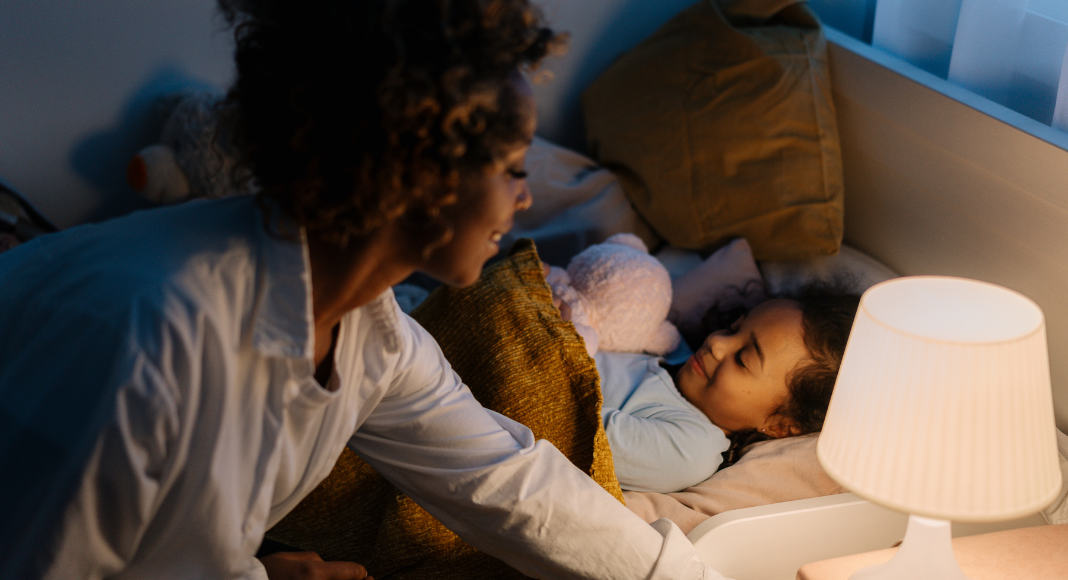
 Does your child struggle to stay in bed after lights out? Do they get back out of bed, call out repeatedly, or need you to lie down with them to fall asleep? If you’ve tried bribing, pleading, and even threatening them to no avail, you may want to try the Excuse Me Drill.
The Excuse Me Drill is a highly responsive and gentle sleep coaching technique that uses positive reinforcement to address bedtime resistance. It is designed for children who are at least three years old who sleep in a bed (not a crib). Because it’s gradual, it requires patience. Plan on investing a few weeks if you choose this method to teach your child to lie quietly in their bed and go to sleep.
You can start by working on bedtime only (and continue doing what you usually do in the middle of the night to get them back to sleep), or work on bedtime and night wakings at the same time. I especially like this technique because it allows parents to focus on what their child is doing well instead of what they’re not accomplishing. That always feels better for everyone.
Here’s how it works.
1. Sit next to your child on their bed and use physical touch to comfort and relax them.
Once they’re still and quiet for a few minutes, say something like “You’re doing a great job staying in bed.” Then make up a “job” that will take you out of the room. It doesn’t matter what the job is. You want to create an excuse to leave the room for a very short period of time.
Say something like,” Excuse me, but I need to go check the laundry. You stay quietly in your bed, and I’ll be right back.” Then, do just that – leave the room and come back before your child has the chance to get out of bed or follow you out of the room. (You may not even make it out of the room at first, but that’s ok).
2. When you return, sit next to your child again and resume the physical touch. Describe the positive behavior you see.
“Wow, look how nicely you’re lying in bed. That’s great that your head’s on your pillow.” Spend a few minutes together before making up another excuse to leave again. Say something like “Excuse me, but I need to check on the dog. You stay in bed quietly, and I’ll be right back.”
Leave again for a short while, then come back and praise them again for staying in their bed. By returning and praising your child for staying in bed, you’re reinforcing the behavior. Be prepared. You may need to do this twenty or thirty times on night one.
3. Once your child is doing well, you can begin staying out of the room for longer periods of time.
Vary the amount of time each time you leave – the unpredictability will encourage them to stay in bed in anticipation of the praise they’ll receive for doing so.
4. Try to be outside the room when your child falls asleep.
The goal is to have them initiate sleep on their own without your presence. This may not be possible at first, but don’t worry. You can work up to it over the next few days.
If your child gets out of bed before you return, you can walk them back, or, if your child gets out repeatedly, you can try telling them that you’ll be back as soon as they hop into their bed.