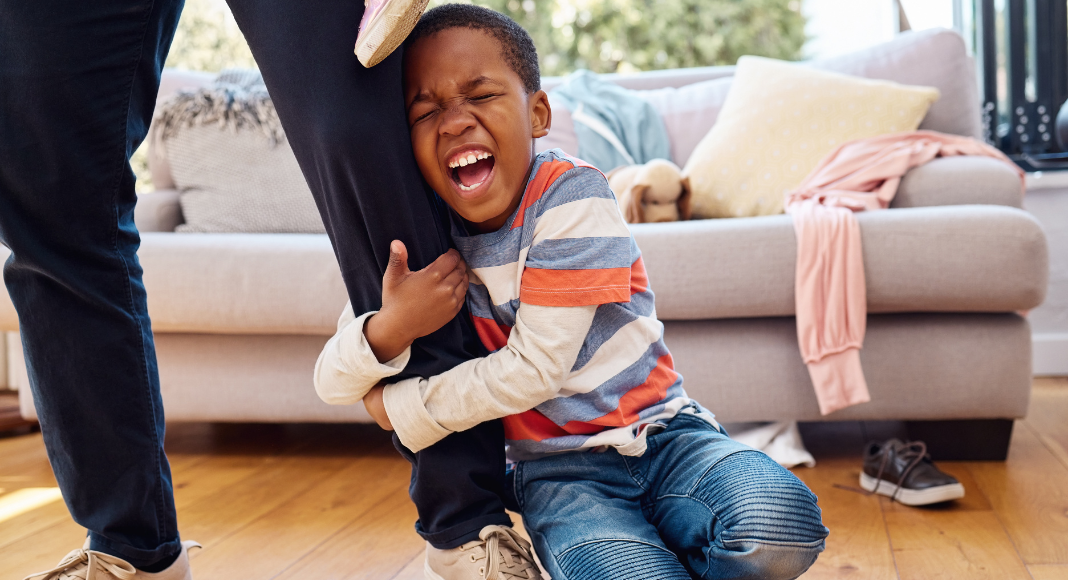
 Even as adults, many of us struggle to manage strong emotions. We’ve seen people bubble over in anger at workplaces, restaurants, highways, etc. Many of us weren’t taught coping mechanisms as we developed and grew. We learned some through experience and observation, but direct instruction of feelings and emotions is invaluable to young children and proves to beget kinder communities.
So, as we kick off the new school year, here are some helpful tips to process strong emotions in young children.
The first step is acknowledging what we as adults bring to the table. What are our own emotional triggers? For example, if a child’s actions trigger a parent’s anxiety, they may respond differently than when they are calm. How we respond can easily reinforce a child’s sense of self and their ability to handle emotional situations.
When working in a psychiatric hospital, I was trained to know my own triggers to patients experiencing emotional and behavioral disorders. I learned that spitting was a trigger for me. I knew that if a patient attempted to spit on me, I would need to walk away and swap out with another direct care worker. That would put me on an emotional tilt, and therefore, I wouldn’t be able to perform an optimal intervention with that patient.
Awareness as adults and parents is key to helping our kids learn to handle all types of situations life will send our way.
Children, as early as infancy, can learn to recognize their own parents’ unique voices and faces. Facial expressions can also be identified at a young age, so kids are more in tune with the emotional happenings around them than we give them credit for.
Emotional labeling is one of the earliest techniques we can use as parents to help our children navigate all the feels. Whether watching a show, reading a book, or experiencing real-life situations, stating what the character is feeling will help your child learn to do the same.
For example, you could say, “Look, that boy is happy he found his kickball.” What are the physical characteristics of that feeling? “The boy is smiling and now skipping with his ball.” You can really break it down. What does smiling look and feel like? Can you see his cheeks go up and the corner of his lips go up when he’s smiling? What does smiling look like on us? Grab a mirror and practice the feelings.
Happy and sad are two of the simplest early feelings to label and identify. Feelings like anger and frustration are slightly more complex to identify because they are often intertwined with intensity and passion. Connecting those strong feelings with how they affect your body is a great way for preschool-age children to understand.
Does their face feel hot when they are mad, or do their muscles feel tight? Often, we can point out how characters in books have red-painted faces when angry or their fists are balled up and tight. After a tantrum, a toddler might be sweaty and hot. It’s a good time to say something like, “You were very angry and now sweaty, let’s get you a drink of water to cool down.”
Actions like this help a young child better understand themselves the next time and restore their sense of self after an unfortunate tantrum. Feeling identification through music is also a great way for kids to gain understanding. We all know a familiar tune can get our bodies pumping or help us cry it out when we are sad. Use those opportunities while listening to music to talk about the feelings your mind and body experience when listening. “I feel so silly doing the hokey pokey. It makes me laugh.”
Non-verbal children can point to which characters feel happy, sad, angry, etc. Pictures of all different emotions can be extremely helpful when a child doesn’t have the words to express how they feel, or they are so overwhelmed by the feeling that they can’t speak. “Which face do you feel like? Point to it.”
Feelings are universal. It is a connecting thread of humanity. Remember, all feelings are okay. How we choose to act on those feelings may be the problem.
Being able to label the feeling and connect it to the physical body reaction is so important. Children who learn social-emotional skills are less likely to act out violently and create kinder, more empathetic communities. They have a better sense of self and are more adaptable to their surroundings.
Starting to teach them to deal with strong emotions when they are young is vital. Seeing a child go from full-blown tantrum-throwing, screaming, and crying to telling their parents they are frustrated (when they can hardly say the word) is joyous. It’s equipping them with the necessary tools to draw upon throughout the duration of their lives-and improve upon themselves as they go.