We have now built three recycle bots.
They are not identical. This is important because it creates the impression that three separate learning experiences occurred.
They did not. What we have instead is a progression. Not of the children. Of me.
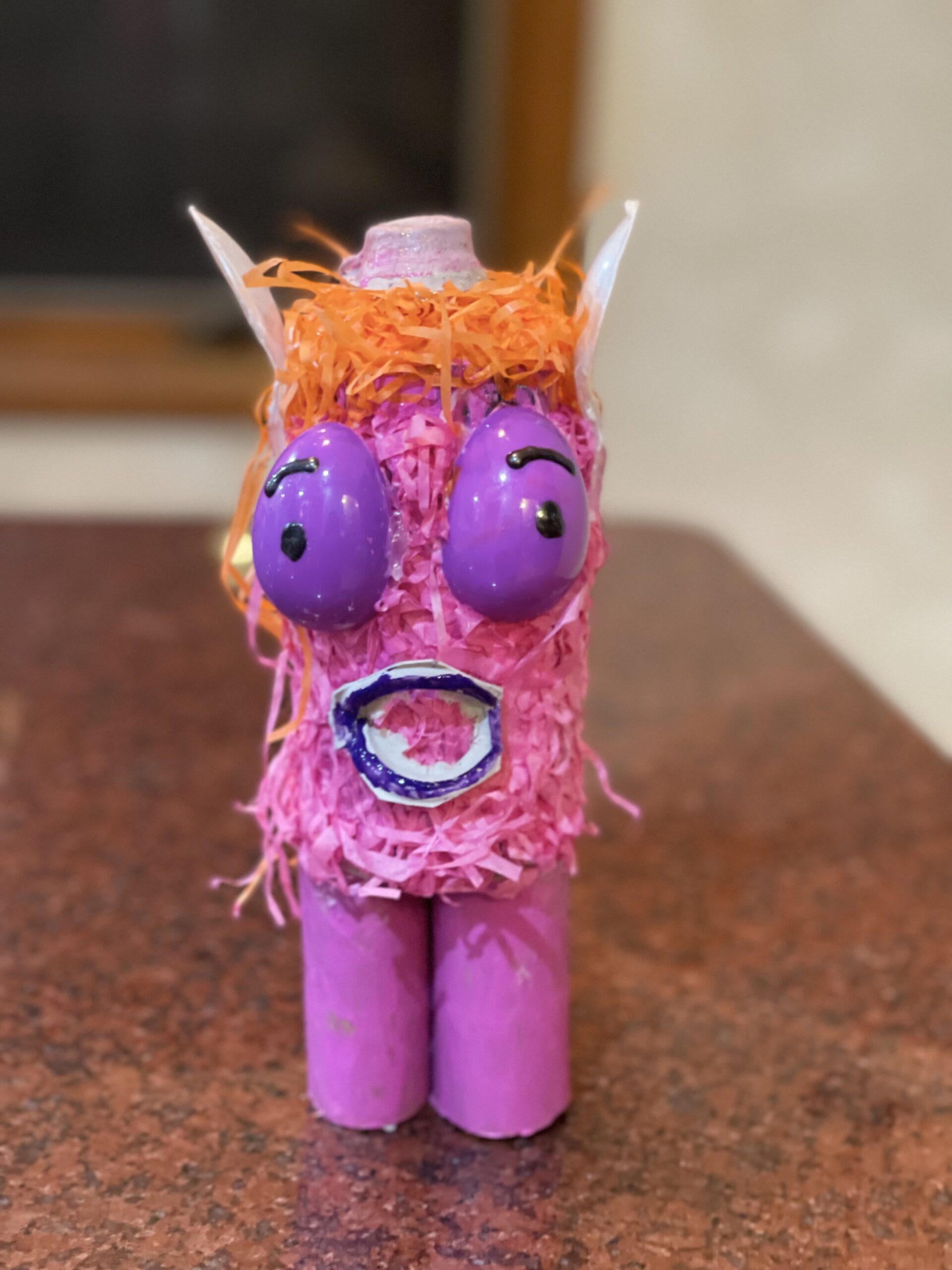 The first bot was pink.
It was made of shredded paper, hot glue, and urgency. Easter egg halves were placed where one might reasonably expect eyes to be. They were understood at the time to be eyes. They were not.
Someone pointed out—correctly—that they looked like boobs, and they were immediately and permanently reclassified as such. There was no appeal.
From that point on, the bot became less a STEM project and more a conversation we were not prepared to have on a Tuesday night.
It did not move. It did not detect. It did not recycle. It did, however, make an impression. No children were involved in this process.
This is not hyperbole. They did not want to help. They expressed this clearly, early, and with remarkable consistency.
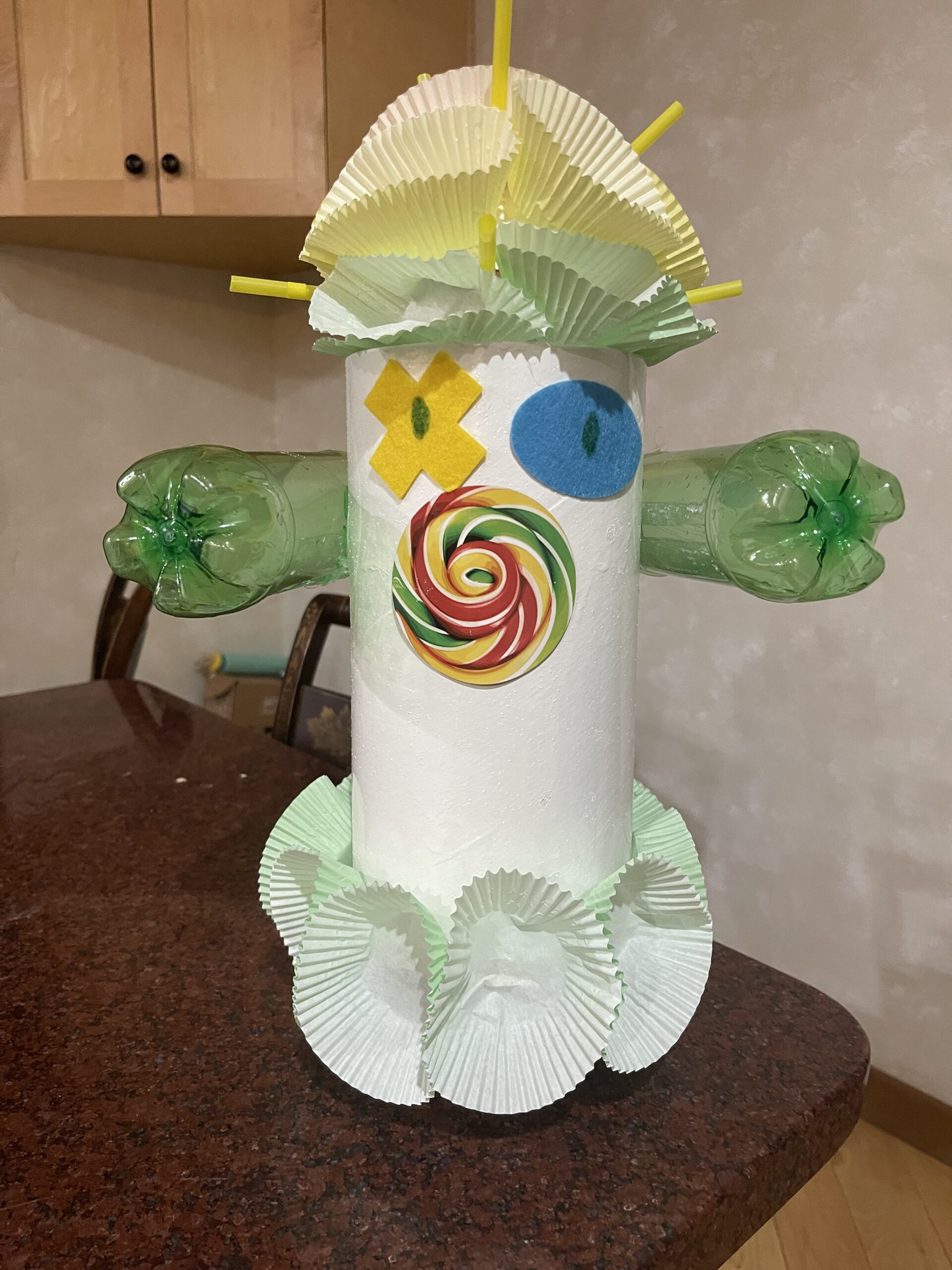 The second bot was false confidence.
A white cylinder with bottle arms, decorative flourishes, and a level of aesthetic commitment that suggested function had been considered and deliberately rejected. It had personality. It had presence. It had a lollipop affixed to its face for reasons that were never fully explained, which felt less like a design choice and more like a cry for help.
There were no wires. There was no circuitry. There was not even the illusion of function.
This was not a robot in the technical sense. It was a craft project that had been promoted beyond its qualifications, essentially, a decorative argument.
And yet, it looked convincing. Like something that might, under the right circumstances, come to life. It did not. But it carried itself as though it could, which, in retrospect, feels like the most transferable skill any of us brought to this process.
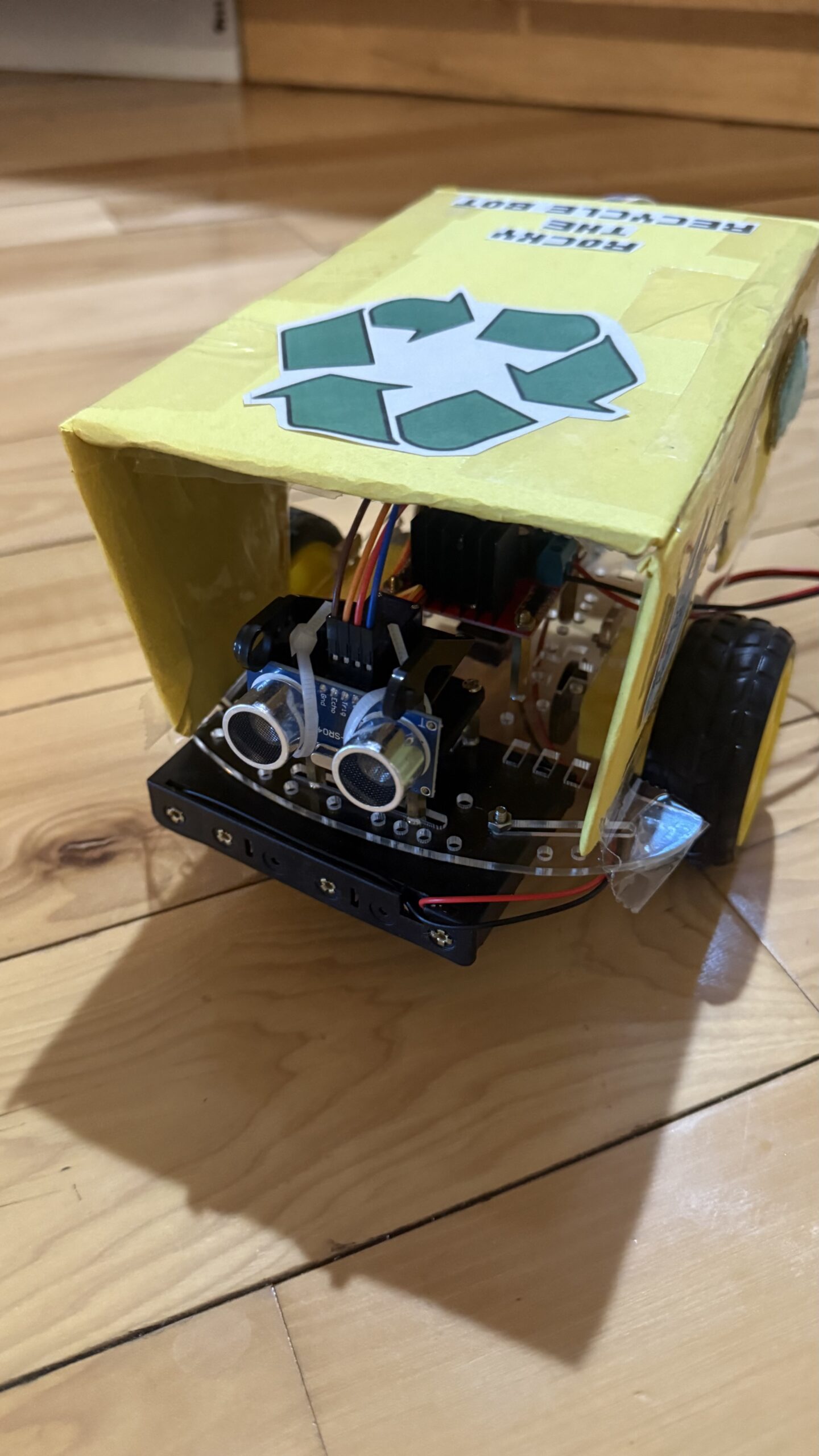
The third bot is competence.
We named him Rocky the Recycle Bot. This suggests a level of collective investment that did not, in fact, occur. He has wheels. He has sensors. He has code that, through a combination of persistence and what I can only assume is divine intervention, actually works.
He moves. He detects obstacles. He responds, reliably, to input. He does what he is supposed to do. At this point, he is arguably the most responsive member of the household. He is also, increasingly, my best friend.
And the engineer in our family—who holds a B.S. in computer engineering from Case and an M.S. in computer science from Stevens, and spent a decade at Lockheed Martin coding warships—has, throughout this entire process, maintained a position of strategic distance.
He appears occasionally, offers a highly specific technical observation—something about grounding, PWM signals, or the motor driver—and then disappears before any meaningful follow-up can occur, like a consultant who knows exactly what the problem is and has no intention of explaining it. Which leaves me.
Me, with a Ph.D. in organic chemistry and a postdoctoral fellowship in medicinal chemistry, neither of which has proven especially helpful here.
Me, who did not intend to relearn circuits, electrical engineering, and coding somewhere between elementary school assignments and bedtime, and yet now has.
Me, who now has opinions about breadboards and Raspberry Pi.
Me, who has written code late at night while whispering “just go forward” to an object that, at that point, felt more cooperative than anyone else in the house.
And the children? If you are wondering what they have learned, I encourage you to ask them.
Ask them what a sensor does. Ask them why polarity matters. Ask them anything.
You will be met with a level of confidence entirely untethered from understanding, which, in fairness, may be the most transferable skill of all.
Because they will present these bots. They will explain them. They will receive praise. And I will stand there, smiling, thinking: I built that.
Not metaphorically. Not in the way we talk about motherhood, where everything is shared, meaningful, and growth-oriented.
Literally. I built that. Three times. Alone.
The materials changed. The expectations escalated. The bots improved.
And somewhere along the way, the learning quietly migrated. Away from them. Toward me.