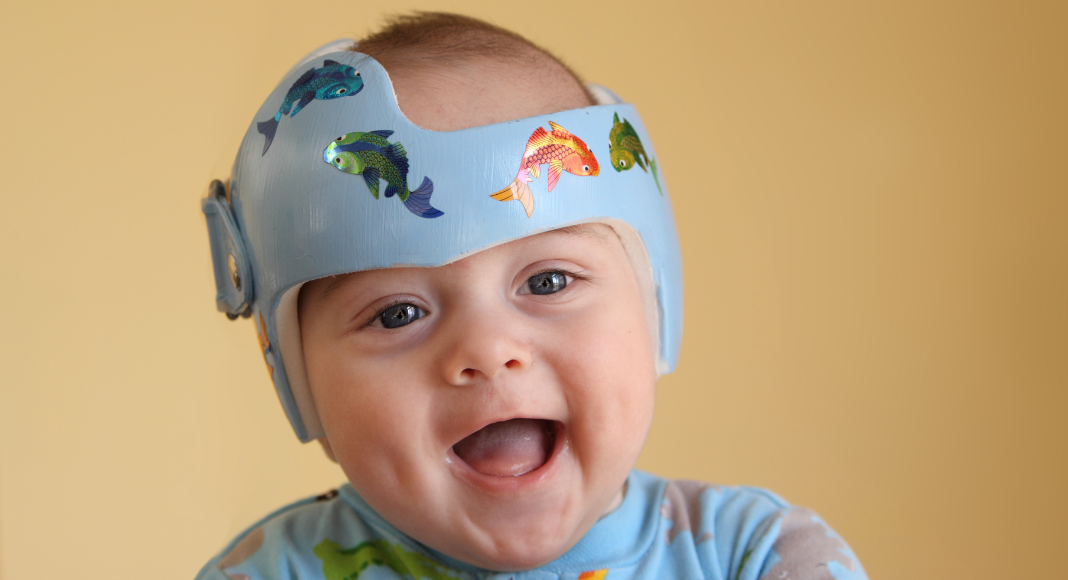
 I’m about to be a proud mama of two doc band graduates. Four years ago, when my toddler was born, we noticed his head shape. With a Master’s degree focused on bone morphology (shape), I knew immediately when my son’s skull was off.
I mentioned it to his pediatrician, who suggested that we wait two months and proceed with a consultation for a doc band if it hadn’t figured itself out. We tried all the suggested repositioning, and I blamed myself. I had seen worst-case scenarios of this in archaeological examples, often because of medical or cultural reasons, but I was confused as to why it had come up with my son.
After researching, I realized what had changed in our culture. The rate of SIDS – sudden infant death syndrome – had increased. All new parents worry about the unknown with horror stories that live in their heads and wake them up to check on them randomly during the night in those first weeks. But since the “Back is best” campaign in the United States with recommendations from birth that babies sleep on their backs, SIDS has decreased by more than 50%.
For my own kids, we noticed their head shape when they were born and torticollis (tightening of the neck muscles), likely because of their positioning in my uterus. They both nestled in (another thing I get to blame myself for and feel the mom guilt over). Years ago, when this would have happened, they would have said, “Have the baby sleep on its belly to stop any pressure on the skull.”
But now, with the safety campaign “Back is best,” there’s been an increase in plagiocephaly. Now, most sources agree that around 47% of babies have some degree of plagiocephaly, compared to the 1 in 300 figure reported in the early 90s. Anyone with my kind of degree will tell you they’ve often found themselves staring at a stranger’s head shape, so I knew it was possible but had no idea about the increased rates when my first child was born.
What is plagiocephaly, and what’s the treatment?
Plagiocephaly, pronounced play-jee-oh-sef-uh-lee, is when a baby develops a flat spot on their head due to the soft skull being remodeled as they spend time in the same position in the womb or post-birth. It can also develop due to torticollis, tight neck muscles, or womb positioning.
A doc band helmet is custom-made for the baby and applies gentle pressure to the skull, redirecting bone growth. It’s made with super lightweight material, and most often, the baby will wear it all day and sleep in it, too. The before-and-after scans are usually quite remarkable, and it’s key to catch the growth periods early on for the skull.
So what should you do if you notice this with your child?
- The first thing to do is advocate for yourself and your baby. So many general healthcare providers appear to have outdated advice on this. Once a baby passes six months old, the shape typically doesn’t fix itself, and the earlier the helmet treatment starts, the less time they will need treatment. Instead, speak to a physical therapist and get a consultation with cranial technologies. You don’t need a doctor’s referral for an initial consultation.
- Take the guilt and emotions out of it. It’s no one’s fault, especially the parents. You’re doing the right thing by still having them sleep on their backs.
- Use science and data. When you go for an initial consult, it isn’t just about somebody’s opinion. They use technology and photography in a method known as digital surface imaging. By using this method, they can collect data and numbers, so rather than somebody looking at your child’s head and giving an opinion, they can give you facts and figures, and this also gives you more of an idea whether you are mild, moderate, or a severe case.
You can then decide on the band. My boys have only needed a band for eight weeks. In both cases, insurance covers the cost of some or all of the band. We were so pleased with the treatment results, and I would do it again in a second. Plus, they look extra cute in the helmets and get an even cuter graduate diploma at the end of the treatment!