
















 There was a stretch in the late nineties and early aughts when every woman I knew either owned, was reading, or had pressed into someone else’s hands a copy of Women Who Run With the Wolves. The book turned up everywhere: on nightstands, in dorm rooms, beside yoga mats, passed between women like sacred contraband.
My high school valedictorian built her entire graduation speech around it, which I should clarify was not delivered at some private feminist seminary but at a public high school, in front of an auditorium that was at least half teenage boys. They sat through fifteen minutes of impassioned wolf-woman reclamation with the polite, glazed expression of young men who had recently been promised pizza. At the time, it struck me as impossibly sophisticated. In retrospect, it may have been the first time I witnessed a woman commit fully to a bit, regardless of the room.
The thesis, as best I remember it, was that somewhere deep inside every woman lived a wild, instinctual creature longing to be reclaimed. We were not meant to be tame. We were wolves. We were powerful. We were untethered.
At the time, this sounded extremely compelling.
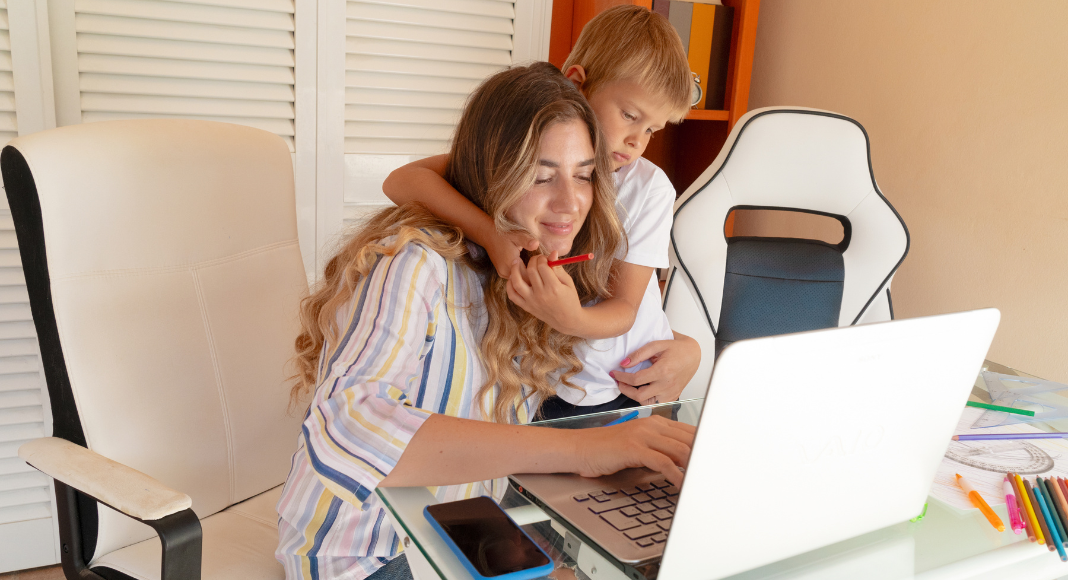
These days, most mornings, I spend twenty minutes locating a missing water bottle while triaging school emails and explaining to a child that pajama day is not, in fact, a license to wear whatever he slept in, regardless of how persuasively he argues the technicality.
The wolf woman, it turns out, still has to sign the field trip permission slip.
A few months ago, someone called me a warrior mom. I cannot remember the exact provocation. It may have been after discussing my daughter’s dyslexia. Or my son’s evaluations. Or the logistical circus act that is managing three children, a law practice, therapies, dance schedules, IEP meetings, and the four thousand Google Calendar notifications that arrive each week with the relentless cheerfulness of a small woodland animal.
The details blur eventually. Modern motherhood often feels less like parenting and more like middle management for very small, emotionally volatile clients who refuse to use the project tracker.
“You’re amazing,” she said.
I am not.
I thanked her because that is what women do. But later, sitting in my car nursing my fifth Café Americano of the day, I found myself wondering whether we have taken this whole warrior thing a little too far.
Somewhere along the line, motherhood stopped being something women did and became a proving ground for mythological endurance.
We are no longer simply mothers. We are warrior moms. Tiger moms. Mama bears. Fierce advocates. Cycle breakers. We are expected to heal generational trauma while packing peanut-free lunches, painting pumpkins to resemble beloved storybook characters, rebuilding robotics projects we did not fully understand the first time, moonlighting as our children’s personal Uber drivers, attending the mid-morning Mother’s Day Tea and then the midday Mother’s Day Brunch, each scheduled with cheerful disregard for the fact that some of us are due in Stamford Superior Court that afternoon, and remembering which day is “dress like your favorite book character” day.
We are not merely raising children; we are, apparently, engaged in an epic battle for their emotional well-being while also maintaining careers, marriages, extracurricular schedules, and homes that permanently smell faintly of wet sneakers and whatever was spilled in the backseat sometime around Lent.
And listen, I understand why this language exists. It is trying to honor women. Motherhood is hard. Parenting children with different needs, personalities, struggles, and sensitivities is hard. Sitting through evaluations where a stranger explains your child back to you in clinical language is hard. Watching your child struggle while other children seem to glide effortlessly forward is hard. Advocating over and over and over again for support that always feels one meeting, one form, or one waitlist away is hard.
There are days I have gone directly from a difficult school conversation to a client call without enough time in between to wipe away the smudged mascara under my eyes.
But I have started to suspect that the warrior narrative has quietly become another impossible standard women are expected to meet because warriors do not get to fall apart.
Strong mothers become the women everyone relies on, and no one checks on. The competent ones. The organized ones. The ones who “have it handled.” People admire these women, but admiration is not the same thing as support. In my experience, the more capable a woman appears, the less likely anyone is to ask whether she is actually okay.
And many of us are very much not okay.
Not catastrophically not okay. Not movie-scene-breakdown, not okay. But sometimes I think about the way The Awakening ends—Edna walking calmly into the sea—and I get it in a way I did not at seventeen. Not because I want her ending. Because I know that kind of tired.
A quieter kind of drowning, then. The kind where you are simultaneously researching reading interventions, ordering poster board for a project due tomorrow, answering emails at midnight, trying not to forget spirit week, rhinestoning a dance costume, and wondering at what point raising children began to require a password, a portal login, and a separate app notification for every conceivable interaction.
There is also something faintly absurd about modern motherhood’s preoccupation with primal feminine power when most of us spend our days hunting for overdue library books and cutting the crusts off sandwiches no one is going to eat anyway.
The wolf imagery, in particular, feels aspirational.
Deep inside me, there is no powerful, untamed creature awaiting reclamation. Deep inside me lives a woman trying to remember whether anyone fed the dog.
And yet I understand why women cling to these metaphors. “Warrior” sounds better than exhausted. “Strong” sounds better than overwhelmed. Mythology is almost always more comfortable than honesty. It is easier to imagine ourselves as fierce creatures than as ordinary women stretched too thin by systems that increasingly depend on maternal overfunctioning to function at all.
Because that is the part we do not say out loud enough: much of modern life quietly runs on mothers absorbing unsustainable amounts of labor. Emotional labor. Administrative labor. Educational labor. Scheduling labor. Invisible labor. Schools rely on it. Activities rely on it. Families rely on it. Entire communities run on women remembering things.
And when women begin to buckle under that weight, we tend to respond not by lightening the load, but by praising their ability to carry it.
Call her a warrior. Tell her she is amazing. Marvel at how she does it all.
Just do not ask why she has to.
I don’t think mothers need fewer compliments. We need fewer impossible expectations dressed up as empowerment. We need permission to be human, not inspirational. To admit that sometimes we are not resilient wolves standing triumphantly on a moonlit ridge. Sometimes we are just tired women sitting in the pickup line, hoping nobody notices we forgot it was early dismissal.
I do not need a better metaphor. I do not need to be a wolf, or a warrior, or fierce, or a mama anything. I need the school to schedule its Mother’s Day Tea at a time when anyone with a job could attend. I need the family calendar to live somewhere other than in my head. I need the people around me to assume, every once in a while, that I am tired before they assume I am amazing.







Wow. This is fantastic.