 Every June, somewhere between the last-day-of-school countdowns and the first sunburn, I start hunting.
Not for a swimsuit. Not for some glamorous summer getaway. Around here, summer is just recital hangovers and dance intensives in different zip codes. I’m hunting for a song.
Specifically: my Song of the Summer. Capital S, capital S. The one I’ll play while I drive the kids around. The one I’ll blast in the kitchen at 5:47 p.m. when dinner is somehow not happening. The one I’ll catch myself humming three Augusts from now in a Target parking lot and feel something, a flicker of that summer, the way you used to feel about songs in high school, before life got busy and music became a thing happening in the background.
I started doing this on purpose maybe ten years ago, but looking back, I’ve apparently been doing it by accident since I was a teenager. There’s a song for almost the summer of my adult life, and most of my pre-adult one, too. Some I picked deliberately. Some picked me.
The Rules
Over the years, I’ve gotten weirdly specific about what qualifies. There are exactly three rules, and they are non-negotiable.
1. It has to survive the repeat.
I’m talking ten times in a row, windows down, no skipping. If you’re tired of it after three plays, it’s not the one. The Song of the Summer has to have something: a hook, a groove, a weird little instrumental moment at minute 2:14, that rewards you for staying. Most songs don’t. The ones that do tend to be the ones you remember.
2. It has to be catchy, but not necessarily pop.
This is the rule that loses people. They assume “catchy” means Top 40, means whatever is playing in the dressing room at Old Navy. It doesn’t. Catchy means it lodges in your head. It means you find yourself singing it while you’re loading the dishwasher and you didn’t even know you’d memorized the words. Some of my catchiest songs have never seen a chart. Catchiness is a property of the song, not its zip code.
3. It has to age.
This is the hardest one. Lots of songs feel right in the moment; they capture a specific cultural temperature, a viral TikTok mood, and then, six months later, you put them on and cringe. A Song of the Summer has to still feel right when you’re listening to it three years from now in the carpool line. It has to outlast the meme that made it. It has to be the kind of song you can someday tell your kids about without immediately apologizing.
The Archive
If you’d told me at nineteen that I’d one day have a mental Spotify playlist representing two decades of my own life, I would not have been surprised, because at nineteen I was incredibly self-important. But I do, and it is, in fact, a kind of soul map. Here it is, more or less in order.
1999 — Everybody’s Free (To Wear Sunscreen), Baz Luhrmann. Late high school. The summer I felt overwhelmed by the future and needed someone, anyone, to give me an instruction manual. It’s not even a song, technically; it’s a guy reading a graduation speech over a string loop. But I burned it onto a CD and drove around pretending it was a song, and every time it got to “wear sunscreen,”” I felt like an adult who knew things, which I definitely was not.
2000 — Country Grammar, Nelly. Early college. The first summer I had a car that was technically my own: a 1983 Toyota Camry with a tape deck adapter and no working air conditioning, but mine nonetheless. I drove it as I’d earned it. The whistle hook on that chorus made every green light feel like the start of something. I had no business driving with the windows down. It’s a small miracle I’m here to write this.
2001 — Shadowboxer, Fiona Apple. Not my first heartbreak by a long shot. By then, I already had plenty of experience with men leaving. My father disappeared when I was a kid. My high school boyfriend broke up with me at prom, which honestly feels aggressively on brand in retrospect. But this was the heartbreak that felt cinematic. A Marine I dated in college slowly faded out before “ghosting” even had a name, then started sleeping with someone down the hall like he was running some kind of educational outreach program. I spent that summer lying on the floor of my bedroom in the dark listening to Fiona Apple on repeat, feeling equal parts devastated, dramatic, and deeply validated. “Shadowboxer” sounded like someone intelligent enough to put rage, humiliation, and longing into words when I couldn’t yet do it myself. Fiona was speaking for me then. She still is.
2003 — ’03 Bonnie & Clyde, Jay-Z & Beyoncé. I fell for someone who was extremely not for me. I made the mistake everyone has made: letting a song convince me that whatever was happening was epic. It wasn’t epic. It was a guy. The production, however, still slaps. I will defend the production until I die.
2008 — White Blank Page, Mumford & Sons. My grandfather died while I was in grad school, a thousand miles from home, and there is something deeply unnatural about trying to care about reaction yields when the person who held your family together is suddenly gone. He was the father figure who stepped in when mine left. The steady one. The glue. Meanwhile, I was still expected to show up at the lab and run experiments as if grief were something you could schedule around. I listened to “White Blank Page” walking across campus at night, exhausted and untethered, feeling like everyone else had somehow continued living in the same world. At the same time, mine had quietly shifted underneath me. Some people don’t just occupy a place in your life. They are the structural parts holding it up. And when they’re gone, everything feels a little less stable, even the parts that seem unrelated.
2010 — Love the Way You Lie, Eminem ft. Rhianna. One of those songs that everyone blasted in their cars that summer without fully acknowledging how dark it actually was. I listened to it while trying very hard not to examine certain parts of my own life too closely. The relationship I was in at the time had already developed the kind of volatility where every fight somehow became both catastrophic and normal. Looking back, it’s mildly alarming how comforting it felt to hear chaos turned into a catchy chorus. At twenty-something, I think I confused intensity for passion and emotional exhaustion for love. The song didn’t cause any of that, obviously. But it became the soundtrack to a period of my life where I kept explaining away things that should have scared me.
2011 — Super Bass, Nicki Minaj. Old enough to know better, young enough not to care. Nicki rapped about a boom-badoom-boom, and I memorized every word. I have since had to apologize to my kids for knowing every word. I am not sorry. The hook is a hook. The verses are virtuosic. History will redeem me.
2012 — Skinny Love, Birdy. People assume Skinny Love is a heartbreak song, and on paper, sure, it is. But the summer it found me, I wasn’t heartbroken. I was struggling, quietly, in the way you struggle when you can’t quite name what’s wrong, when the people around you would tell you everything is fine and on paper they’d be right. Bon Iver wrote the song bare, and Birdy stripped it down further: a teenage girl and a piano, asking come on, skinny love like she was asking her own life to hold on a little longer. I was asking my own life to hold on a little longer. It did. I still think about that song the way you think about a friend who showed up at exactly the right time and didn’t make a big deal about it.
2013 — I Love It, Icona Pop (ft. Charli XCX). The summer I decided to get a little reckless on purpose. Three minutes long. Two chords. A chorus you can scream with the windows down. There is a kind of perfection in pop music that doesn’t ask anything of you, and that summer I needed something that didn’t ask anything of me. I LOVE IT. I DON’T CARE. Right.
2016 — Gypsy (Fleetwood Mac, 2016 remaster). I was six months pregnant with my second child that summer, and still carrying the emotional aftershocks of my first baby’s NICU stay in ways I probably didn’t fully understand at the time. The remaster sounds like sunlight through a windshield. Soft, warm, fleeting. I was the wrong age for Stevie Nicks the first time I heard her, and exactly the right age then. “Gypsy” is a song about all the versions of yourself you miss once your life starts dividing itself into before and after. Before motherhood. Before fear lived permanently in your body, before loving people so much became terrifying. Stevie Nicks somehow makes longing feel less like sadness and more like proof that those earlier selves still belong to you. She’s generous that way.
2020 — Bang!, AJR. The summer where nothing happened and I needed a song to pretend something was happening. The horns. The hand-claps. The deeply earnest production decisions. I went to no parties, attended no weddings, saw no concerts — but I had Bang!, a steering wheel, and an empty parking lot, and that was, for a season, enough.
2022 — Big Energy / About Damn Time. A two-song summer. Latto’s Big Energy – that Mariah sample, that bounce – was the morning song. Lizzo’s About Damn Time was the evening song. Some years you can’t pick. I let myself have both.
2023 — Players, Coi Leray. That Grandmaster Flash sample. The strut of a chorus that sounds like a woman walking past you without looking back. I needed the strut that summer. I had been carrying things. Coi Leray, let me put them down for three minutes at a time.
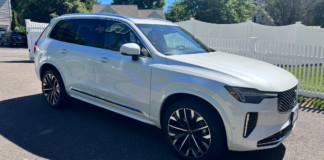
2024 — Pink Pony Club, Chappell Roan. Before everyone knew Chappell Roan, then very much after everyone knew Chappell Roan. A song about a girl leaving her hometown to dance at a gay bar in West Hollywood is, somehow, also a song about being a mother in a Volvo XC90 in a school pickup line. I don’t know how she did that. I’m grateful she did.
2025 — Lose Control, Teddy Swims. That voice sounds like it was borrowed from another decade, like somebody raised on Otis Redding accidentally wandered into 2025. It was the summer I started my own law firm and the summer my daughter kept leaving in small, necessary ways: sleepaway camp, dance intensives across the country, growing up. The house was quieter without her. So was the car. “I lose control when you’re not next to me” is supposed to be about romantic love, but that’s the thing about songs: once they belong to you, they stop meaning what the songwriter intended. I played it loudly between court calls and client emails, windows down, trying to get comfortable with the strange tension of building a life you wanted while simultaneously mourning the versions of it already disappearing. Even my husband, a brutal music critic, eventually conceded the chorus.
Every one of them passed the three rules. Every one of them still holds up. I tested them.
Naturally, I made a playlist. You can listen along here while driving around pretending your own life is a coming-of-age movie.
The Hunt
Here is the part nobody tells you about being in your forties with kids: you have to make time to find new music now. It will not find you. Nobody is going to slip you a burned CD in homeroom anymore. Nobody is going to text you at midnight saying YOU HAVE TO HEAR THIS RIGHT NOW.
So in June, I start. I open the apps. I read the lists. I let the algorithm cough up its candidates, then push back because it wants me to like what I already liked, and I’m trying to find something I don’t know yet.
I drive around with one song on repeat for a week. I play it in the kitchen and see if it makes me dance while I’m chopping onions. I play it loud, and I play it quiet. I play it for my husband, who is a generous listener but a brutal judge, and I watch his face. I play it for my kids, who are honest in the specific way that only children can be honest, which is to say: cruelly.
If a song survives all of that—the dishwasher, the car, the husband’s face, the children’s verdict—it might be the one. Most years, by the second week of July, I know.
This Year
This year, I found it earlier than usual. By the end of April, I was already in the territory where you start protecting a song from yourself, playing it deliberately, not too much, because you want it to stay fresh through August.
It is, of all things, Pink Skies. Zach Bryan, of all people. A slow, country-folk song from a son to his late mother, of all songs to grab a woman whose archive is heavy on hip-hop and Icona Pop. The algorithm did not see this coming. Neither did I.
We’ve had a hard spring. There was a death in the family, the kind that rearranges what your week looks like, what your phone looks like, what the inside of your head looks like at 3 a.m. And the blind, deaf dog has a heart condition now; I take him for checkups, and he acts normal at the vet, so the kids don’t worry. There’s been a lot of quiet driving lately. A lot of just-me-and-the-road, the kids in school or asleep.
Pink Skies met me there. It met me in the car. It met me at the kitchen sink at ten at night. It is not a sad song, exactly; it’s a son thanking his mother, telling her he hopes the sky was beautiful for her, walking through the people who showed up after. It has the strange property of making grief feel less alone, which is the only thing grief actually wants.
It passes all three rules. It survives the repeat; I have repeated it more than I should admit. It’s catchy in that slow, undeniable way some country songs are, where the chorus settles into your ribs and stays there. And it will age. I already know it will age because it’s a song about the people you’ve lost, and there will only ever be more of those.
I’ll keep testing it through August.
And then, sometime around Labor Day, I’ll stop playing it on purpose. I’ll shelve it. And one day, three years from now, I’ll be standing in the cereal aisle at Target, and the Muzak version will come on, and I’ll feel the whole summer come rushing back: the kids screaming in the pool, the smell of sunscreen on the dashboard, the dog asleep on the kitchen floor with his one tired heart, the particular shape of the light at 7 p.m. in late July, and the people who weren’t there for any of it but felt close anyway.
That’s what the Song of the Summer is for. Not for the summer. For the rest of your life.