
















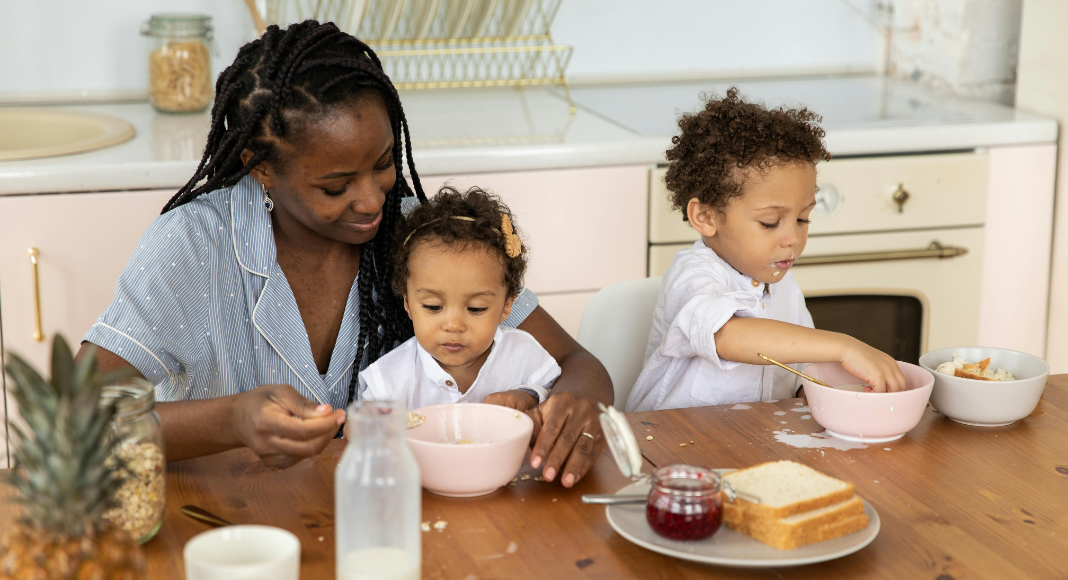
 There’s a certain kind of grief that comes with mothering without a mother. Not because your mother died, though for some women, that’s the story, but because the relationship you had with your mother was too painful, too unhealthy, too unsafe to continue carrying into your adult life and into your children’s lives.
Choosing to end the relationship with my mother was not impulsive or dramatic. It was years of recognizing that the relationship wasn’t healthy for my children or for me. At some point, protecting my peace and protecting my kids mattered more than maintaining a relationship just because people think mothers and daughters are supposed to stay connected no matter what.
And when you choose distance, boundaries, or complete separation, people often assume the hard part is over. But nobody really talks about what comes after. Even when it’s the right choice, there’s still grief.
At least there has been for me. Not always grief for the mother I had, but grief for the mother I wish I had. The one I imagine calling after a hard day. The one who would reassure me that my kid’s latest phase is normal and that I’m not permanently ruining them because I lost my patience before coffee. The one who notices I’m overwhelmed before I hit the point of crying in the pantry while hiding from my children and pretending I’m “putting groceries away.”
Mothering without a mother can feel incredibly lonely in ways that sneak up on me when I least expect it. It’s standing in the middle of Target, staring at an entire wall of children’s sports equipment, wondering why kids apparently need different cleats for every single sport and why they cost the same as a small car payment. Seriously, a cleat is a cleat, right? It’s Googling fevers at midnight because there’s no default person to text. It’s realizing that other women casually call their moms for parenting advice, while I’ve spent years learning how to trust my own instincts because I had no other choice.
And when you didn’t grow up with healthy parenting modeled for you, motherhood can feel like trying to assemble IKEA furniture without instructions, except the furniture is tiny humans with big emotions and the ability to humble you in public daily.
I second-guess myself constantly. Am I too soft? Too strict? Am I creating lifelong memories or future therapy material? There’s this quiet pressure that follows me around because I’m not just raising kids; I’m also trying to break cycles while healing parts of myself at the exact same time, and it’s F-ing hard! And honestly, it’s like a lot to carry while also remembering spirit week themes, signing permission slips, and trying to figure out what everyone is going to eat for dinner again.
I want so badly to give my children something healthier than what I experienced, and the anxiety ball in my stomach daily is constant. I think mothers without mothers carry an invisible weight. We are hyper-aware of the kind of home we’re creating because we know firsthand how deeply childhood shapes a person. We know what it feels like to carry wounds into adulthood, and we become determined not to hand those same wounds to our children.
But somewhere along the way, something beautiful happened, too. I started building family differently.
I found women who became lifelines. The friend, a few years ahead of me in motherhood, who reassures me that seven-year-olds are basically just tiny emotional tornadoes with snacks and opinions about everything. The seasoned sports mom who kindly explained travel soccer without making me feel dumb when I clearly had no idea what was going on. The mom friends who answer my panicked texts with “Oh yeah, my kid did that too” when my child is melting down over something like a sock seam that feels “weird,” which, honestly, can feel more grounding than they probably realize. Those women don’t replace a mother. But they remind me that support and nurturing can still exist in my life, even if they arrive differently than I imagined.
And while there are still moments that hurt, there is also something incredibly powerful about becoming the parent I never had. About choosing emotional safety over obligation. About creating a home where my children feel seen, safe, loved, and accepted for exactly who they are.
Some days I still wish things were different. Some days, I still feel the ache of not having a mother to lean on during motherhood. But then I look at my children and realize something that makes all of this feel worth it: They will never have to recover from their childhood the way I did.
And maybe, just maybe, that is one of the most powerful forms of mothering there is.










Thank you so much for this. It was healing for me. ❤️